Wondering what the difference is between international SEO and local SEO? Well, the difference is pretty clear from their names. In international SEO, a website ranks for keywords that are not tied to any specific location, no “city,” “near me,” or regional keywords. On the other hand, local SEO focuses on ranking a website for a particular location such as a city, town, or even a neighborhood.
Surprisingly, the conversion rate of local keyword searches is over 1000x higher than that of general keywords. Even more impressive, 46% of all Google searches have local intent; meaning people are looking for products or services near them.
So, if you ask any SEO expert which one is better for instant rankings, higher conversions, and more leads, they’ll almost always recommend local SEO.
As a local business, you might wonder; why should you focus on local SEO instead of global? The answer is simple: your target audience is nearby, not across the world. For example, if you’re a mechanic, your customers are most likely from your own city or town, not from another country.
And here’s a powerful stat: 76% of consumers who search for “near me” visit a business within a day.
In this blog post, we’ll cover everything you need to know about local SEO, why it matters, how it works, and how it can help your business grow.
Understand Local SEO Like a 6 Grade Student
Local SEO means optimizing your website to rank in a specific location or region rather than targeting the entire world.
For example, there are two ways a customer might search for a service:
“Web design company in Auckland”
If your website ranks for the first keyword with a location mentioned, it means you’re optimizing for a specific local market. But if your site ranks for the second keyword without a location, you’re optimizing for a global audience.
Local SEO focuses on local keywords, location-based backlinks, and content tailored for nearby customers. It also includes setting up your Google Business Profile (GBP) and submitting your business to local directories, helping potential customers in your area easily find and connect with your business.
How Local SEO Works?
The mechanism of local SEO works a bit differently from traditional SEO. When a customer searches using a local keyword, search engines display results in a more personalized and location-specific way compared to normal keyword searches. With local searches, Google aims to show the most relevant and nearby results, as the chances of conversion are significantly higher.
For example, if someone searches for “salon near me” on Google, here’s how it works:
Google considers all the usual ranking factors used in traditional SEO but adds three key local factors that make the results more accurate and useful:
- Distance: How far the business is from the location where the user made the search.
- Relevance: How closely the Google Business Profile (GBP) matches the searcher’s intent and keyword.
- Prominence: How authoritative and trusted a business appears based on reviews, number of services, and overall credibility compared to competitors.
By combining these factors, Google delivers the best possible local search results, helping users quickly find the most relevant businesses near them.
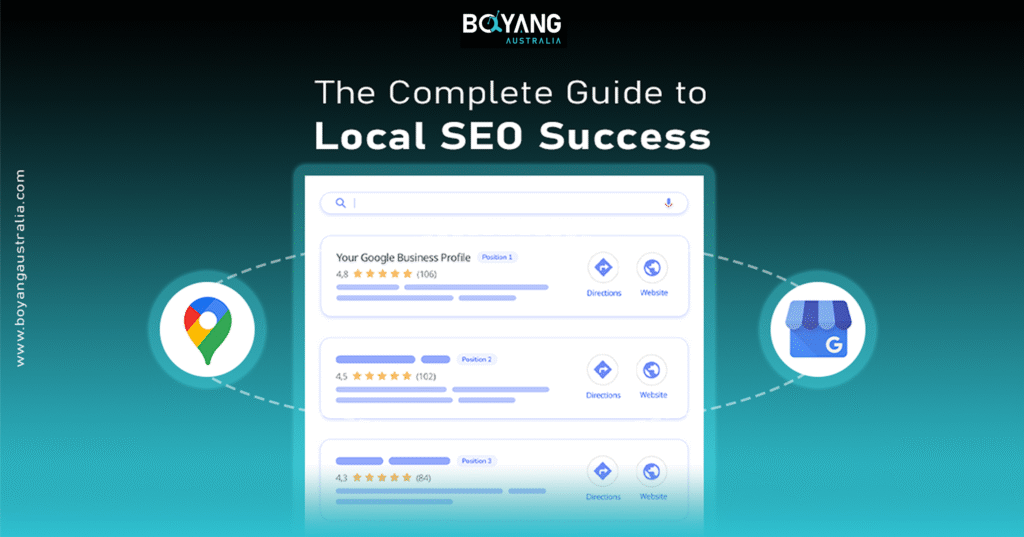
On the SERP (Search Engine Results Page), you’ll typically see two main types of results for a local search.
- First, there are the top 10 organic results, just like in a regular search.
- Second, you’ll find the Local Pack, a special section that highlights the best local service providers. This section usually includes a map, customer reviews, business hours, a short description, a website link, and a few other details that help customers get quick, useful information at a glance.
The Importance of Local SEO for Businesses
Ignoring local SEO means missing out on one of the easiest and most profitable ways to generate leads and grow your business. Local customers who live in or near your area are far more likely to buy your products or use your services than people living hundreds or even thousands of miles away.
Startups, small businesses, and local stores benefit the most from local SEO compared to large enterprises. That’s because ranking locally is much easier and faster than competing on a global scale. With local SEO, you’re only up against nearby businesses, while in international SEO, you’re competing with companies from all around the world.
Your future customers are looking for you right now, on their phones, probably down the street! And when they find what they need, they act fast. Think about it: 3 out of 4 people will visit a shop they find on their phone that same day. That’s not just a click; that’s someone walking in your door.
So, how do you get seen? Stop being invisible. A sharp local SEO strategy is your spotlight, shooting you to the top of search results and putting you right in front of the ready-to-buy crowd in your neighborhood. Let’s get you discovered.
Key Components of Local SEO
A potential customer is standing just a few blocks away, pulling out their phone and typing the very service you provide. In that critical moment, will they find you? Or will they find your competitor? The single most powerful tool to ensure it’s you is your Google Business Profile (GBP). It is not as a simple listing, but as your business’s free, all-access VIP pass to prime digital real estate, the top of Google’s search results and that all-important pin on Google Maps.
So, what exactly is this profile in practice? It’s your 24/7 digital storefront. Even before your website loads, your GBP is working for you, appearing directly in Google’s local search results and on Maps. When someone searches “coffee shop near me” or “emergency plumber,” Google’s algorithm acts like a matchmaker, comparing that user’s intent to the information in business profiles. A complete, accurate, and active GBP is your way of raising your hand.
The information you control here is your direct line of communication. It’s where you display your essential details, your exact street address, your current phone number, and your precise opening hours, so a customer never faces a locked door. But it goes far beyond the basics. This is your stage to build credibility and allure. You can:
- Showcase your work with high-quality photos of your products, your team, and your location.
- Build social proof by actively managing and responding to customer reviews.
- Promote what’s new by posting updates about sales, new menu items, or special events, keeping your profile fresh and relevant.
Local Keywords and Content Creation
Just like general SEO, local SEO also thrives on great content, and that starts with local keywords. Local keyword research helps you discover what people in your area are actually searching for.
Your mission is simple: find and use geo-specific keywords that your nearby audience is typing into Google. Tools like Semrush can make this easier. Once you’ve found the best local keywords, weave them naturally into your website and blog content to attract nearby, ready-to-buy customers.
But here’s a warning, don’t just stuff keywords everywhere. You need to prove that you’re truly part of the community. Become the go-to expert by talking about what matters locally.
For example, a real estate agent could create posts about the best local cafés, schools, or community events. This kind of authentic local content makes you genuinely valuable to your audience.
This strategy does two powerful things: it builds real connections with your community and sends strong signals to Google helping you rise higher in local search results. Speak their language, and they’ll find you.
Importance of NAP Consistency
NAP is your business’s core identity: Name, Address, and Phone Number. It’s the essential info customers need to find and visit you. For Google and voice assistants like Siri, consistent NAP is a trust signal. They use it to verify your business and deliver accurate results.
You’ll display your NAP on your website’s header, footer, and contact page. But it also lives across the web in online directories and social media profiles, these are called local citations. Consistency here is everything. Conflicting details confuse both customers and search engines, hurting your rankings.
60% of smartphone users contact a business directly from search results. If they click a wrong number from an old listing, that lead is gone forever. One typo can cost you a sale.
Staying consistent can be a chore, but tools like Semrush’s Listing Management make it manageable. Most importantly, regularly check your Google Business Profile. Google sometimes auto-updates your info based on outdated web citations or public suggestions. Protect your rankings by ensuring your NAP is always accurate and uniform everywhere. Your visibility depends on it.
Advanced Local SEO Tips To Help You Rank Faster
-
Optimize Google Business Profile (GBP)
Creating a Google Business Profile (GBP) is essential, and most businesses already do it. However, what many don’t realize is that simply creating a profile isn’t enough. The real difference comes from optimizing it properly.
Businesses that actively optimize their GBP tend to rank faster and higher in local search results. To optimize yours, make sure it’s fully updated with accurate business information, the right categories, and relevant keywords.
Post at least two new images every week, share monthly updates, and ensure every section is completely filled out. A well-maintained GBP signals to Google that your business is active, reliable, and worth showing to nearby customers.
-
Use Location-Specific Keywords Naturally
If you’re trying to rank in a specific country, city, or town but haven’t mentioned that location anywhere on your website or Google Business Profile, you’ll likely never rank locally.
Local SEO is all about optimizing for a specific area or region, and clearly naming your location helps Google understand your local relevance.
Conduct proper local keyword research and include those keywords naturally in your content, titles, meta descriptions, and GBP description. This tells search engines exactly where your business operates and helps you appear in the right local searches.
-
Build High-Quality Local Backlinks
Building high-quality backlinks from reputable websites is essential for ranking in both global and local SEO.
However, the key difference with local SEO is that even a few backlinks from local websites, directories, or community blogs can make a big impact. Because local competition is lower, these local backlinks help your business rank faster and higher within your area.
-
Get More Genuine Reviews
One of the most powerful factors that help your business rank faster isn’t just keywords, content, or backlinks; it’s the number of genuine positive reviews you have on Google and your website.
In fact, around 50% of local ranking depends on the quality and quantity of your reviews. So, make sure your business consistently earns authentic, positive feedback from satisfied customers. It’s one of the strongest signals of trust and credibility for both Google and potential clients.
-
Ensure NAP Consistency Everywhere
Your Name, Address, and Phone number (NAP) must be identical across all online listings. Inconsistent data can hurt your local ranking.
Wrap-up
By now, you’ve probably learned that if you run a physical store and your target audience is the customers near your location, then Local SEO is the right path forward.
Your next question might be; how easy is Local SEO compared to Global SEO, and can I do it myself?
Well, Local SEO is generally easier than global SEO because it requires less time, effort, and competition. However, if you’re not experienced with local SEO strategies, it’s always better to work with a local SEO company.
By partnering with Boyang Australia, you’ll get a team of local SEO specialists dedicated to delivering impressive, measurable results within just 3 months, helping your business reach more local customers, faster. Contact us today to get started with Free SEO audit report and quote.